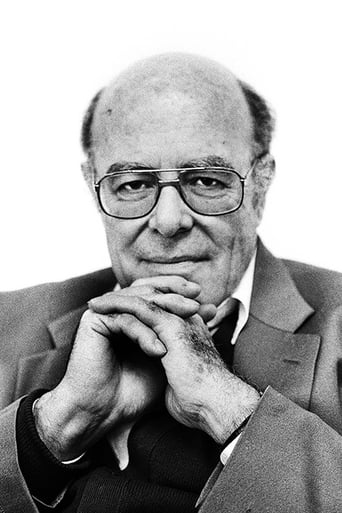
Actor
Marcel Ophüls
Marcel Ophuls (German: [ˈɔfʏls]; born 1 November 1927) was a German-French documentary film maker and former actor, best known for his films The Sorrow and the Pity and Hôtel Terminus: The Life and Times of Klaus Barbie. Ophuls was born in Frankfurt, Germany, the son of Hildegard Wall and the director Max Ophüls. His family left Germany in 1933 following the coming to power of the Nazi Party and settled in Paris, France. Following the invasion of France by Germany in May 1940 they were forced to flee to the Vichy zone, remaining in hiding for over a year before crossing the Pyrenees into Spain in order to travel to the United States, arriving there in December 1941. Marcel attended Hollywood High School, then Occidental College, Los Angeles. He spent a brief period serving in a U.S. Army theatrical unit in Japan in 1946, then studied at the University of California, Berkeley. Ophuls became a naturalized citizen of France in 1938, and of the United States in 1950. When the family returned to Paris in 1950 Marcel became an assistant to Julien Duvivier and Anatole Litvak, and worked on John Huston's Moulin Rouge (1952) and his father's Lola Montès (1955). Through François Truffaut, Ophuls got to direct an episode of the portmanteau film Love at Twenty (1962). There followed the commercial hit Banana Peel (1964), a detective film starring Jeanne Moreau and Jean-Paul Belmondo. With a slump in box-office fortunes, Ophuls turned to television news reporting and a documentary on the Munich crisis of 1938: Munich (1967). He then embarked on his examination of France under Nazi occupation, The Sorrow and the Pity. Although he enjoyed making entertaining films, Ophuls became identified as a documentarian, using a characteristically sober interview style to resolve disparate experiences into a persuasive argument. A Sense of Loss (1972) looked at Northern Ireland, and The Memory of Justice (1973) was an ambitious comparison of US policy in Vietnam and the atrocities of the Nazis. Disagreements with his French backers over interpretation led Ophuls to smuggle a print to New York where it was shown privately. Legal wrangles left him disappointed and financially broke, and Ophuls turned to university lecturing. In the mid-1970s, he began producing documentaries for CBS and ABC. His feature documentary Hotel Terminus: The Life and Times of Klaus Barbie (1988) won an Academy Award; since then he has made an interview film with two senior East German Communists, November Days (1992) and a ruminative look at how journalists cover war, The Trouble We've Seen (1994). Every year the IDFA (International Documentary Festival) in Amsterdam screens an acclaimed filmmaker's ten favorite films. In 2007, Iranian filmmaker Maziar Bahari selected The Sorrow and the Pity for his top ten classics from the history of documentary. At the 65th Berlin International Film Festival in February 2015 Ophuls received the Berlinale Camera award for his life work.
Născut
1 noiembrie 1927
Zodie
Scorpion
Decedat
24 mai 2025
Locul nașterii
Frankfurt am Main, Germany
Filme
11
Activ
1965 – 2024
Ani de carieră
59+
Film iconic
Hôtel Terminus: The Life and Times of Klaus Barbie
Universul filmelor sale
Colaborări frecvente
Regie · 4 filme
Marcel Ophüls
Hôtel Terminus: The Life and Times of Klaus Barbie, Novembertage – Stimme und Wege, Veillées d'armes, Max par Marcel: Lola Montès
Parteneri frecvenți

Filme
11 filme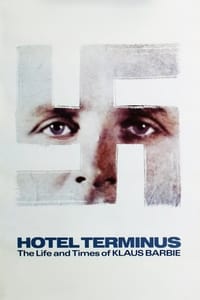
Hôtel Terminus: The Life and Times of Klaus Barbie
Self
1988
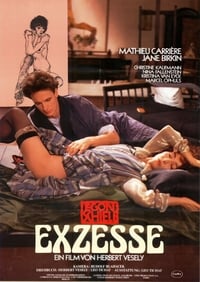
Egon Schiele - Exzesse
Dr. Stovel
1980

Claude Lanzmann: Spectres of the Shoah
Self
2015
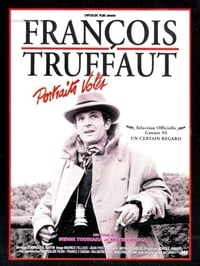
François Truffaut: Portraits volés
Self (archive footage)
1993
Liberty Belle
German teacher
1983

Novembertage – Stimme und Wege
Self - Interviewer
1991

Veillées d'armes
Self
1994
« Le Chagrin et la Pitié » : La France de Vichy dynamitée
Self (archive footage) - Director ("Le Chagrin et la Pitié")
2024
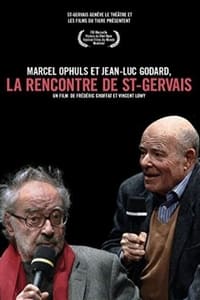
Marcel Ophuls et Jean-Luc Godard, La rencontre de St-Gervais
Self
2011
Cinéastes de notre temps : Max Ophuls ou la ronde
Self
1965
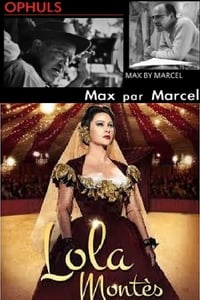
Max par Marcel: Lola Montès
Self
2009